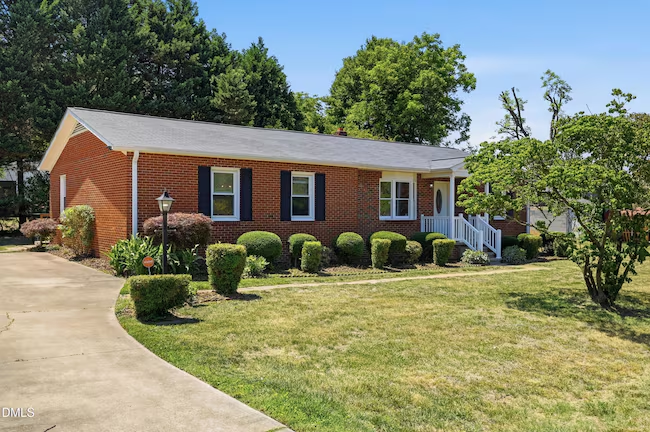
Selling a property as-is can be a practical choice when repairs, cleaning, staging, or repeated showings are not realistic. Homeowners who need to sell house fast in Burlington, NC, should still take time to understand the offer, expected costs, and legal paperwork before signing a contract.
An as-is sale means the buyer is agreeing to purchase the home in its present condition. It does not mean that every issue disappears, that a seller can withhold important information, or that title and closing requirements no longer apply. The right path depends on the property’s condition, the seller’s goals, and the net amount the seller expects to receive.
Why Some Burlington Homeowners Sell As-Is
There are many valid reasons to sell without completing a major renovation. A homeowner may have inherited a house, be relocating for work, be managing a difficult rental, or be facing costly roof, foundation, water, fire, or storm damage. In other cases, the seller simply does not have the time, cash, or energy needed to prepare a property for the traditional market.
Choosing as-is does not require a property to be in poor condition. It can also suit owners who value privacy, want fewer people walking through the home, or need a defined closing date. The key is to compare the convenience of the sale against any difference in expected proceeds.
For homeowners researching direct-sale options, https://www.brighthomeoffer.com/ can be one starting point for learning how a local cash-sale process may work alongside other available selling methods.
As-Is Sale Versus A Traditional Listing
A traditional listing may expose a home to more potential buyers and create competition, especially when the home is clean, financeable, and priced well. However, that route often involves photography, repairs, staging, showings, inspections, appraisal concerns, and buyer loan approval.
Photorealistic editorial shot of a homeowner reviewing a written cash offer and net proceeds documents on a clean desk, with a simple house key and subtle home paperwork visible, controlled soft studio lighting, neutral background, isolated composition, polished commercial real estate style.
An as-is sale can reduce those steps, but buyers commonly account for repair costs, resale risk, and carrying expenses in their price. Consider the differences in practical terms:
- Repairs: An as-is buyer may accept deferred maintenance, while retail buyers may request repairs or credits after inspections.
- Showings: A direct buyer may need only one or two visits, while a listing can involve repeated appointments and open houses.
- Timing: A ready cash buyer may close sooner, but title problems, liens, estates, and paperwork can still delay any sale.
- Price: A retail listing may bring a stronger price, while an as-is offer may reflect the buyer’s expected repair and holding costs.
- Certainty: Financing, appraisal, inspection, and broad cancellation terms can affect whether a buyer ultimately closes.
How Cash Offers Are Usually Calculated
There is no universal formula for a cash offer. Buyers often begin with recent nearby sales and the home’s likely value after repairs. From there, they may subtract estimated renovation work, closing costs, property taxes, insurance, utilities, resale expenses, and the risk of owning the property until it sells.
For example, a buyer may estimate an eventual resale value, subtract a realistic repair budget and projected ownership costs, then leave room for closing expenses and uncertainty. That calculation can produce a lower number than a seller expects, particularly when the condition is difficult to assess. Rather than focusing only on the headline offer, ask for an estimated seller net sheet that shows what remains after deductions.
Costs To Review Before Accepting An Offer
A higher offer can result in lower proceeds if it includes commissions, repair credits, delayed closing costs, or seller-paid fees. Request a complete written explanation of who is paying each expense. Items to review include mortgage payoff amounts, property taxes, association dues or transfer fees, attorney and title charges, insurance and utility payments until closing, commissions if an agent is involved, and any buyer concessions.
North Carolina Disclosure Rules And As-Is Sales
For covered residential transfers, state law generally requires a seller to provide a disclosure statement and, when applicable, an owners’ association disclosure statement. The required property disclosures address matters such as water and sewage systems, structural components, mechanical systems, environmental conditions, land-use restrictions, and association information. Certain transactions may be exempt, so sellers should seek qualified legal advice for their specific circumstances.
As-is wording does not automatically allow a seller to conceal a known problem, misrepresent ownership, ignore a lien, or avoid title work. The North Carolina Real Estate Commission’s guidance on the revised disclosure statement emphasizes that disclosures should be furnished before an offer and updated if new information is discovered. Keep copies of signed forms, repair records, and communications related to material property issues.
Documents To Gather Before Marketing
Preparing a basic file can make an offer easier to evaluate and reduce closing delays. Gather the current deed, a recent mortgage payoff statement, tax information, association documents, surveys, permits, warranties, repair receipts, insurance claim records, and lease agreements for occupied rentals. If the home involves an estate, divorce, trust, or power of attorney, collect the relevant authority documents early.
How To Compare Multiple Offers
Review every offer side by side and ask the same questions. Is proof of funds available? Who pays closing costs? Is the contract assignable to another buyer? Are there inspection, financing, appraisal, or sale-of-other-property contingencies? What cancellation rights does the buyer have? What happens if closing is missed? A clear offer should state the purchase price, earnest money, closing date, included personal property, fees, and deadlines in writing.
Warning Signs In A Cash Home Offer
- Pressure to sign immediately without time for review.
- Requests for upfront payments before a legitimate closing process begins.
- No proof that the buyer has the funds available.
- An unclear buyer identity or a contract with blank spaces and missing pages.
- A buyer who repeatedly lowers the price after the agreement is signed.
- Promises that are not included in the written contract.
- Resistance to having a North Carolina attorney review the agreement.
A Simple Seven-Step Selling Process
- Decide whether speed, price, privacy, or reduced work is the main goal.
- Estimate the home’s current value using nearby comparable sales and its actual condition.
- List known repairs, damage, liens, tenant concerns, and ownership issues.
- Request written offers from more than one buyer or selling professional.
- Compare estimated net proceeds after deducting all fees, payoff, credit, and carrying costs.
- Review deadlines, contingencies, cancellation provisions, and assignment language.
- Close through the settlement professional or attorney identified in the agreement.
Conclusion
Selling a Burlington home as-is can simplify a difficult move or property situation, but it remains a major financial decision. Carefully compare price, costs, closing certainty, disclosure obligations, and contract language. A well-documented property file and a clear review of each written offer can help a seller choose the option that best fits the home and the timeline.