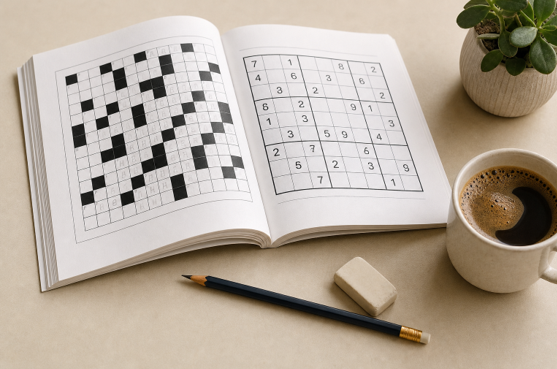
A daily puzzle habit can be a small, calming way to add focus and fun to an ordinary day. Whether you prefer a quick word search over coffee or a longer logic challenge after dinner, a Penny Dell Puzzles crossword puzzle publisher can help make it easier to keep a variety of paper puzzles within reach.
The goal is not to fill every spare minute or prove how quickly you can solve. Instead, puzzle time can offer a clear beginning, middle, and stopping point, which often feels more restorative than drifting from one notification or video to the next. A short session creates a manageable moment of attention in a busy routine.
Why a Small Puzzle Habit Can Be Worthwhile
Puzzles give the mind something specific to do. You look for a word, test a number, compare clues, or notice a pattern. That structure can make downtime feel intentional without making it feel like work. Completing even one small section can also provide a modest sense of progress.
Keep expectations realistic. Puzzle solving is leisure and personal practice, not a cure for stress or a guarantee of better long-term brain health. It works best as one enjoyable part of a balanced life that also includes rest, physical activity, learning, and time with other people.
Choose a Routine That Matches the Day
A routine is more likely to last when it reflects the time and energy you actually have available.
- Busy day: Solve one short word search, mini crossword, or small logic grid.
- Normal day: Spend 10 to 20 minutes on two different puzzle styles.
- Slow day: Complete a longer puzzle, revisit a difficult page, or solve alongside someone else.
Pick Puzzle Types by Goal
- Crosswords: A good fit for readers who enjoy clues, vocabulary, and general knowledge.
- Word searches: An easy starting point for visual scanning and relaxed concentration.
- Sudoku: A number-placement puzzle built around logic, elimination, and pattern checking. The basic number-placement rules are simple to learn, even though difficulty can vary widely.
- Fill-ins: A word format that rewards attention to letter placement and crossing answers.
- Logic puzzles: Useful for comparing clues, organizing details, and ruling out possibilities.
- Cryptograms: A slower challenge based on language, symbols, and deduction.
- Coloring puzzles: A low-pressure option for creative focus when you want a quieter activity.
Use a Simple 15-Minute Puzzle Plan.
- Set the scene: Put your phone away and keep a pencil, eraser, and puzzle nearby.
- Warm up: Start with one easy clue, a familiar category, or a small corner of the page.
- Focus: Work steadily for about 10 minutes without switching activities.
- Pause: Stop before frustration takes over, even if the puzzle is unfinished.
- Reflect: Notice what felt enjoyable, difficult, or worth trying again tomorrow.
Make Screen-Free Solving Easier
Reduce the effort required to begin. Leave a puzzle book beside a favorite chair, store pencils and highlighters in one small container, and choose a regular time such as after breakfast, during a lunch break, or before dinner. Good lighting and a comfortable surface matter more than people expect.
It is also fine to leave a puzzle unfinished. Mark the clues you know, circle the section that caused trouble, and return later with fresh eyes. Stepping away is often part of solving, not evidence that you failed.
What Research Can and Cannot Say
Researchers use game-like tasks to study attention, decision-making, emotion recognition, and related mental processes. For example, game-based cognitive tasks can measure abilities such as attention span and decision-making in research settings. That does not mean completing a puzzle book produces a particular medical outcome.
Improvement may be strongest in skills closely related to the activity you practice. A person who regularly solves crosswords may become more comfortable with crossword clues, while a regular Sudoku solver may become faster at checking number patterns. Enjoy the challenge, but avoid turning a relaxing hobby into a health promise or a competition.
Build Variety Without Complicating the Routine
- Monday: Crossword or another word puzzle.
- Tuesday: Sudoku or a number puzzle.
- Wednesday: Word search or fill-in.
- Thursday: Logic puzzle.
- Friday: Cryptogram or trivia challenge.
- Saturday: A longer puzzle with family or friends.
- Sunday: A favorite easy format for a relaxed finish.
Adjust Difficulty and Make It Social
Begin with puzzles you can usually complete without help. After several comfortable sessions, move up one level or try a new format. Use hints as learning tools, not signs of failure, and return to easier pages on stressful days.
Solving can also be shared. Trade crossword clues with a friend, work on separate puzzles at the same table, or let children choose themes and categories. Group puzzle time works best as a conversation starter rather than a contest.
Common Mistakes That Make a Puzzle Habit Fade
- Starting with an unrealistic one-hour daily commitment instead of 10 minutes.
- Chasing speed when a slower, more enjoyable pace would be more sustainable.
- Using only one format until the activity feels repetitive.
- Ignoring comfort, including poor lighting, cramped seating, or missing supplies.
- Treating mistakes as failure instead of useful clues about the puzzle’s structure.
A Practical 7-Day Starter Plan
- Choose one regular time for puzzle solving.
- Set out a pencil and two puzzle types.
- Start with 10 minutes on the first day.
- Write down which format feels most relaxing or engaging.
- Try a different style by the third day.
- Complete one puzzle with another person before the week ends.
- Keep the version of the routine that feels easiest to repeat.
Final Thoughts
A daily puzzle habit does not need a strict scorecard or a long session. A short crossword at breakfast, a logic puzzle after lunch, or a quiet word search before bed can create a useful pause in the day. Choose the right difficulty, rotate formats as needed, and keep the routine flexible enough for real life.
Stay in touch to get more updates & alerts on TGTube! Thank you